Subscribe for Official Updates
Receive official announcements, press releases, and event notices from the Ajman Government Media Office.

Receive official announcements, press releases, and event notices from the Ajman Government Media Office.
 November 26, 2026
 Ajman Media Office
 education

Ajman Government has adopted the Reference Framework for Student Safety in the Emirate of Ajman, establishing an integrated and sustainable system of protection and care that places student safety at the heart of policies, decisions and services related to the educational experience. The framework establishes a comprehensive approach to student safety spanning every stage of the student’s education-related journey.
Approved by the Ajman Executive Council during its meeting held as part of the UAE Government Annual Meetings 2026, the framework aligns with the objectives of Ajman Vision 2030 for People and national priorities to strengthen family stability, protect children, and enhance the quality of education and community wellbeing.
It also reflects Ajman Government’s strategic commitment to improving quality of life and providing a safe environment that supports the development of future generations.
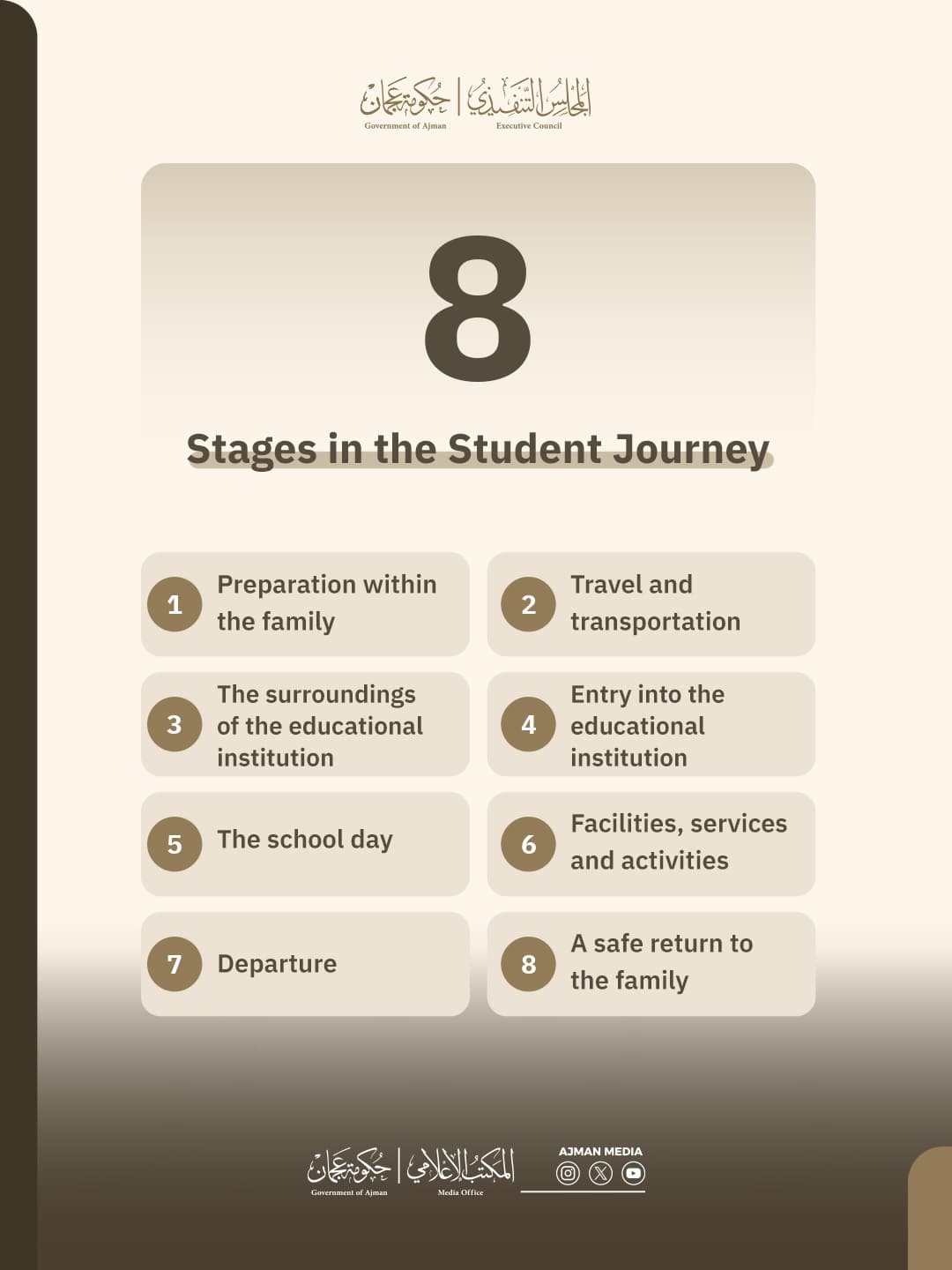
The framework is founded on an integrated vision that extends beyond the traditional concept of school safety to encompass eight interconnected stages in the student’s journey: preparation within the family; travel and transportation; the surroundings of the educational institution; entry into the educational institution; the school day; facilities, services and activities; departure; and a safe return to the family.
The framework places particular emphasis on maintaining continuous protection when responsibility for care passes between different parties. This strengthens the integration of roles and prevents protection from being interrupted by overlapping responsibilities, guided by the principle that responsibility may pass between parties, but student protection must remain uninterrupted.
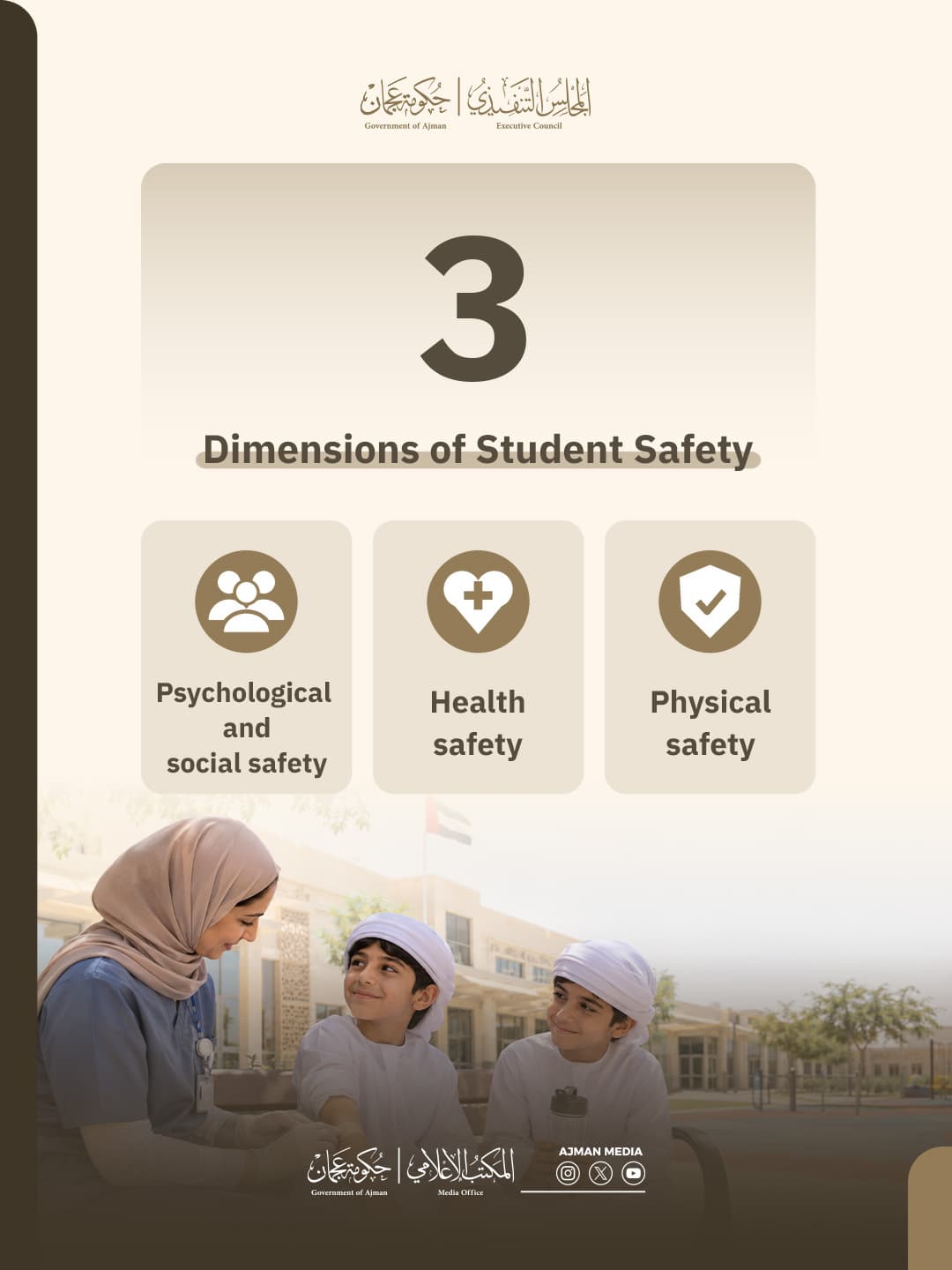
The framework defines three main dimensions of student safety: physical safety and protection against accidents and injuries; health safety, encompassing nutrition, healthcare and basic needs; and psychological and social safety, fostering a sense of security, dignity and belonging while protecting against bullying, violence, abuse, neglect and exploitation.
These dimensions encompass the various physical and digital environments associated with the educational experience, taking into account students’ differing ages, abilities and circumstances and helping to provide an environment that supports learning, growth and safe participation.
The framework applies to all students enrolled in schools in the emirate, including kindergarten stages within the school system.
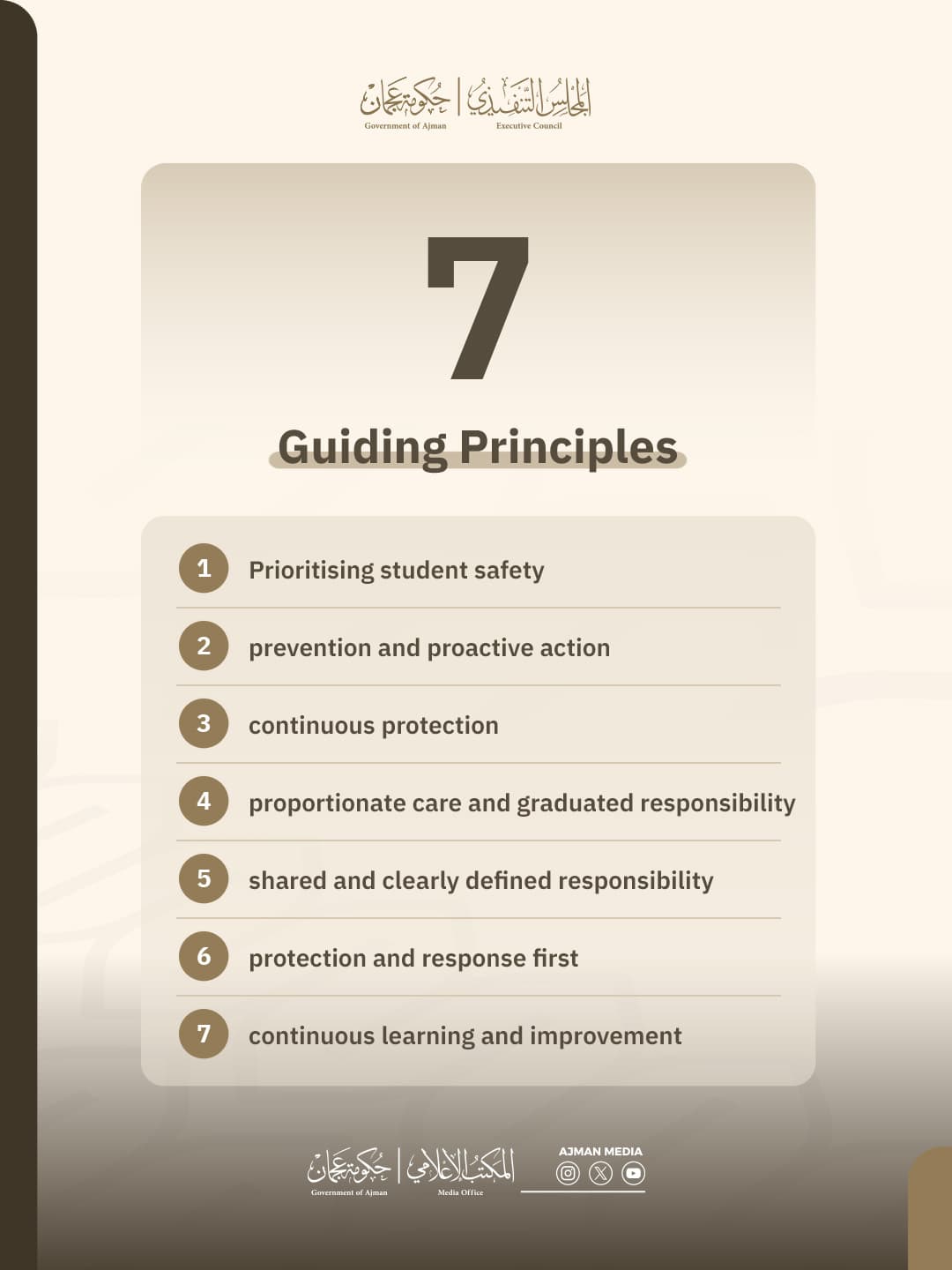
It is underpinned by seven guiding principles: prioritising student safety within an educational environment that is safe for all; prevention and proactive action; continuous protection; proportionate care and graduated responsibility; shared and clearly defined responsibility; protection and response first; and continuous learning and improvement.
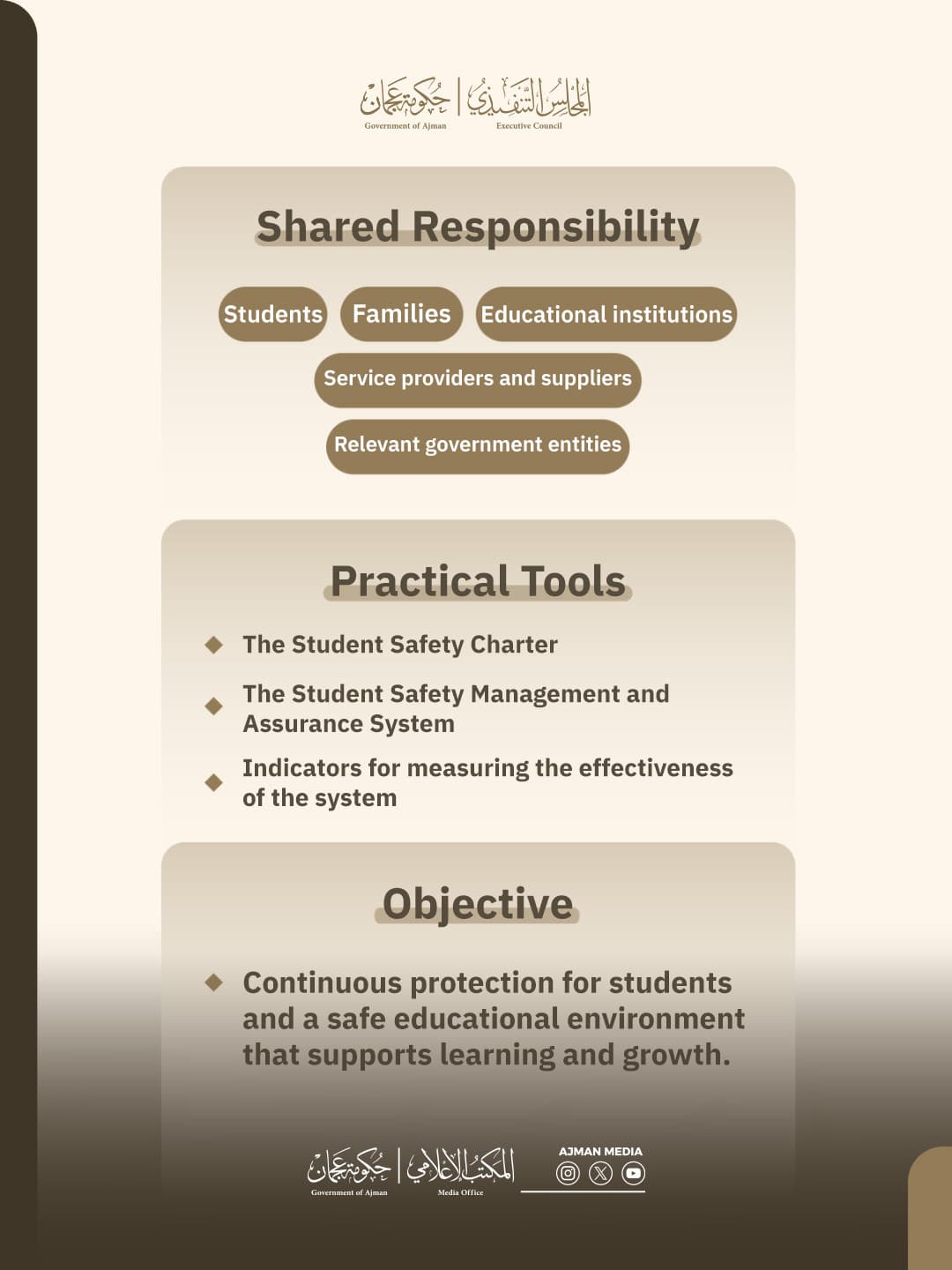
The framework establishes an interconnected system of responsibilities that integrates the roles of students, families, educational institutions, service providers, suppliers and relevant government entities. This clarifies responsibilities, embeds a shared culture of safety, and ensures that students do not bear the consequences of gaps in roles or circumstances beyond their control.
It also strengthens the family’s role as the starting point of the student safety journey by supporting students’ health, physical and psychological readiness for the school day. It further empowers students to express concerns, report risks and seek assistance in ways appropriate to their age and abilities while preserving their dignity and privacy.
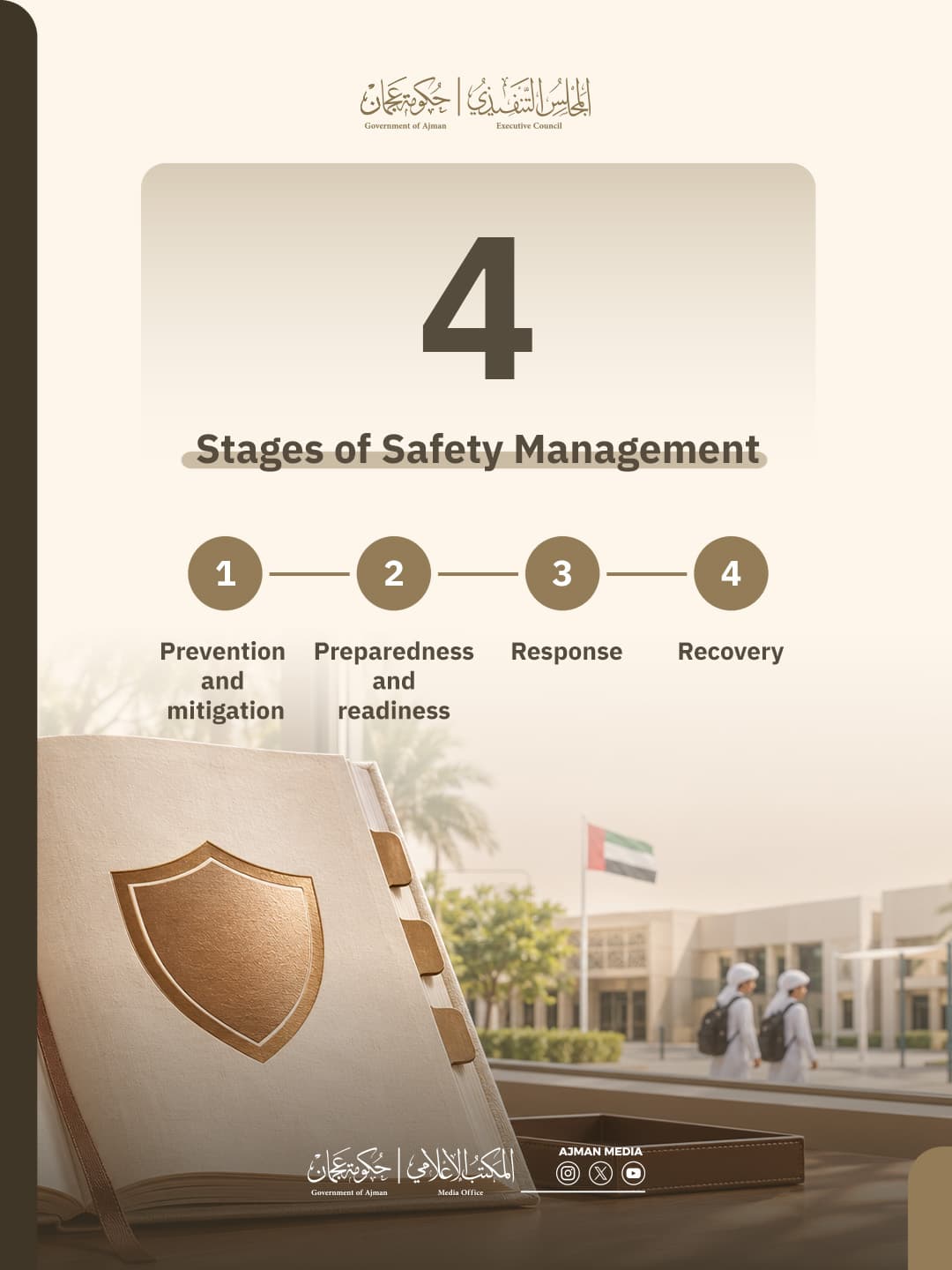
The framework adopts an integrated model for managing student safety, based on four interconnected stages: prevention and mitigation; preparedness and readiness; response; and recovery. These are supported by continuous risk monitoring and the use of data and experience to develop practices and preventive measures.
This approach supports a shift from addressing incidents individually to developing a comprehensive understanding of risks across the emirate, verifying the effectiveness of protective measures, and translating lessons learned into preventive action and sustainable improvements, in integration with existing legislation, policies and systems.
The framework paves the way for developing practical tools in line with the phased implementation of the system, foremost among them the Student Safety Charter, the Student Safety Management and Assurance System, and indicators for measuring the system’s effectiveness. These will help translate its principles and directions into tangible practices that can be measured and continuously improved.
The framework embodies Ajman Government’s approach to developing government work based on people’s needs and everyday experiences, while strengthening integration in addressing issues affecting their quality of life. It contributes to enhancing families’ confidence, reinforcing Ajman’s position as a safe and supportive environment for children, and building a cohesive society and generations capable of helping shape the future.

للمراجعه النهائيه والنشر

 Downloads:
 Press Release
 Photos