Subscribe for Official Updates
Receive official announcements, press releases, and event notices from the Ajman Government Media Office.

Receive official announcements, press releases, and event notices from the Ajman Government Media Office.
 November 26, 2026
 Ajman Media Office
 politics
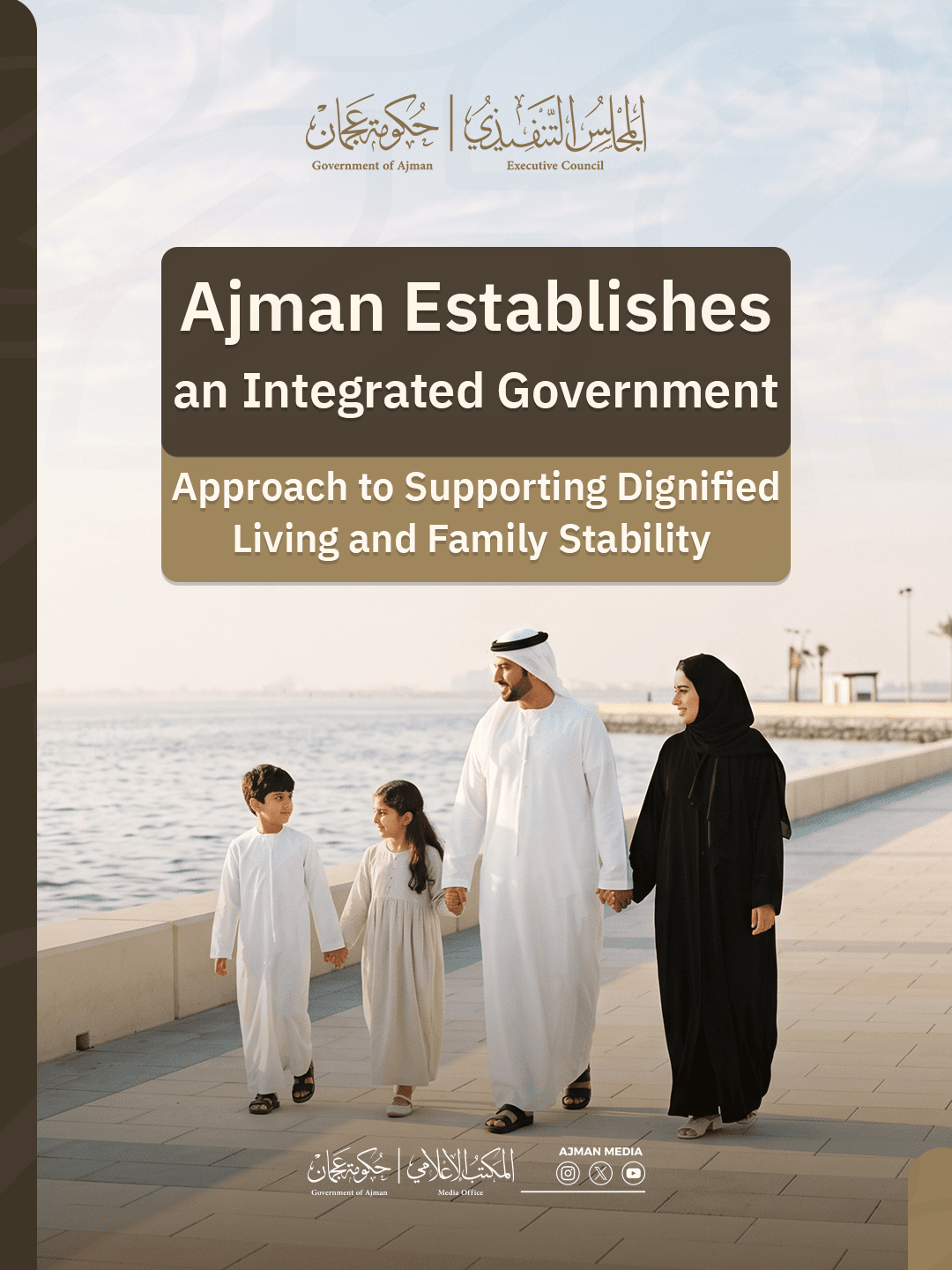
Ajman Government continues to develop its government ecosystem focused on enhancing the quality of life of Emirati families, strengthening their stability and cohesion, and empowering them to respond to change with resilience. This reflects the family’s position as the fundamental pillar of a stable and cohesive society and aligns with the national priorities of the Year of the Family 2026, the National Family Growth Agenda 2031, and the objectives of Ajman Vision 2030.
In this context, the Conceptual Reference for Dignified Living and Family Stability, approved by the Ajman Executive Council during its meeting held as part of the UAE Government Annual Meetings 2026, serves as a shared government reference for understanding Emirati families’ circumstances and needs. It guides policies, services and government interventions to enhance their integration, effectiveness and lasting impact on family life.
The reference establishes a shift in government working methodology, moving from addressing family needs through separate programmes and services to viewing the family as an integrated unit whose circumstances and needs evolve over time. This strengthens coordination across social support, housing, health, education, employment, care and community services, directing government efforts towards shared outcomes.
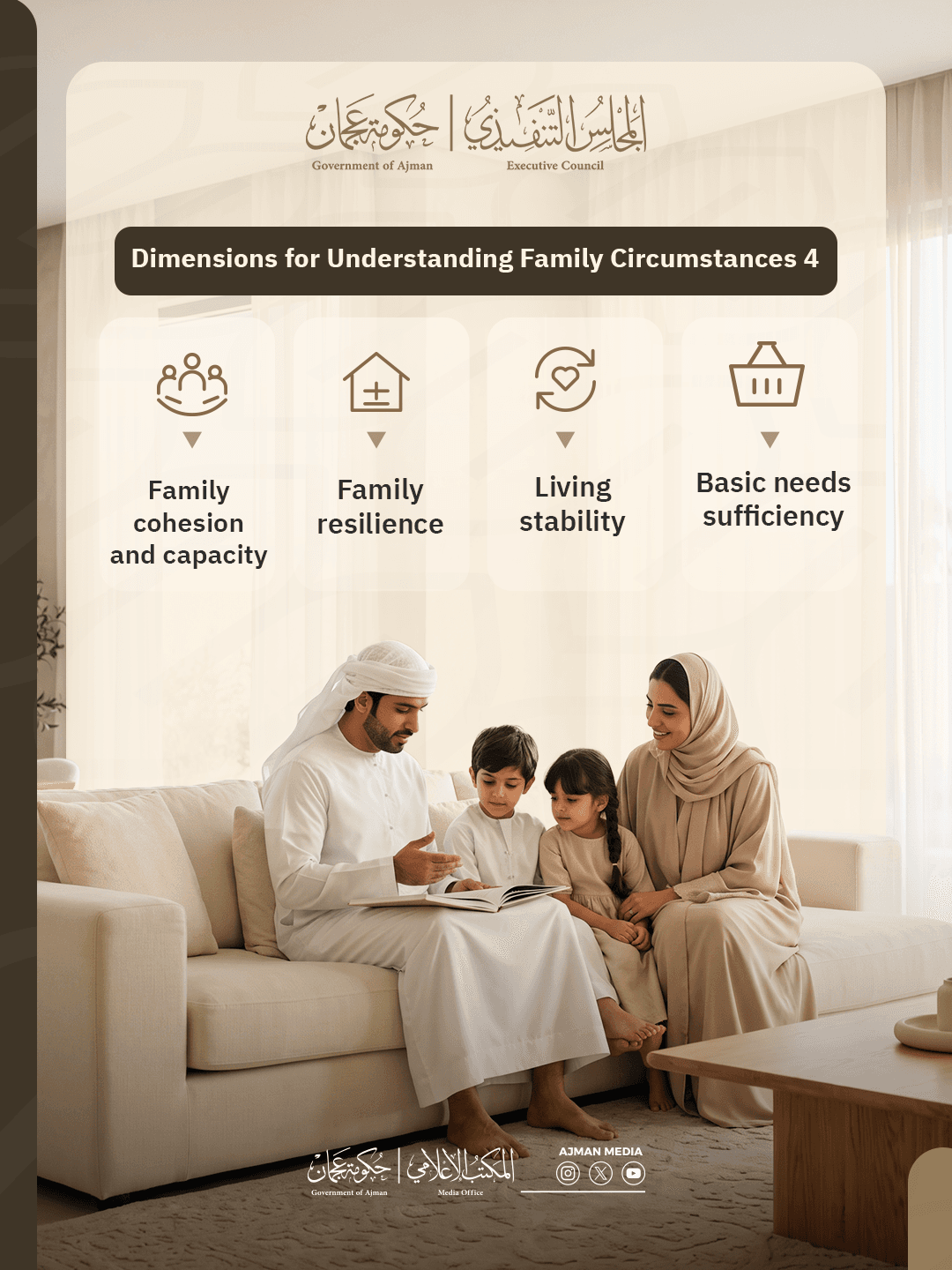
The reference identifies four principal dimensions for understanding family circumstances: fulfilment of basic needs, living stability, family resilience, and family cohesion and capacity. These provide a comprehensive understanding that extends beyond income levels and immediate needs to encompass a family’s ability to maintain its standard of living, respond to change and unforeseen circumstances, fulfil its roles and preserve its cohesion.
It also adopts the concept of a reference budget as a tool for understanding a family’s living needs, taking into account its specific circumstances, composition, number of members, housing and care requirements, and changes in living costs. This is founded on the principle that dignified living cannot be reduced to a single financial benchmark applicable to all families.
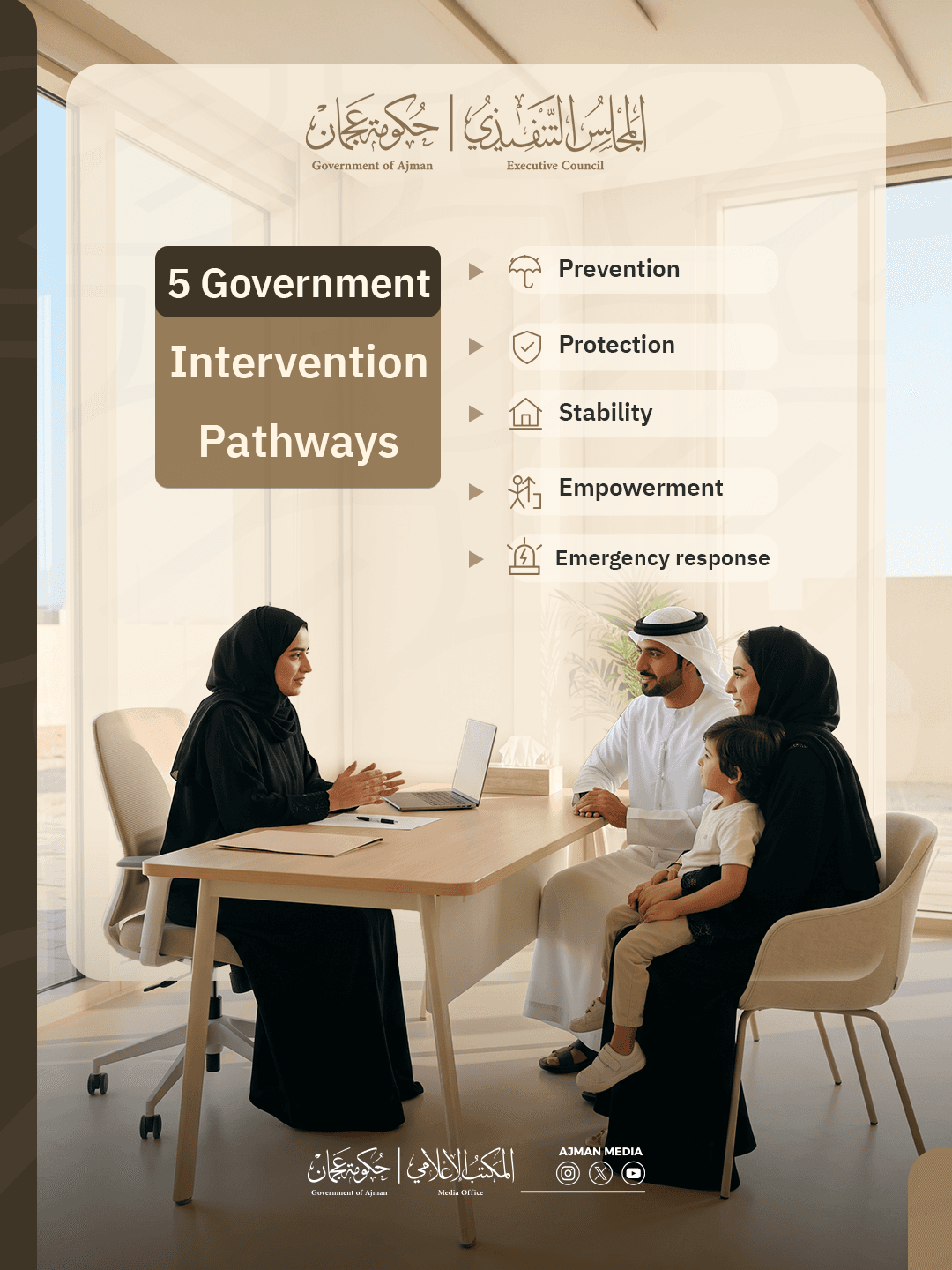
The reference reinforces a proactive approach to challenges that families may face through the early identification of pressures affecting their stability and the direction of government interventions along five principal pathways: prevention, protection, stability, empowerment and urgent response.
These pathways take into account differences in families’ circumstances and their capacity to improve them. They support the empowerment of families able to achieve stability through their own resources, while directing protection efforts towards families with limited capacity to improve their circumstances, according to their needs and conditions.
The reference highlights safe transition as a key foundation for sustained family stability. It establishes the principle of adjusting support gradually when a family’s income or circumstances improve, while considering the combined impact of the support and benefits it receives from different entities. This ensures that an improvement in the family’s circumstances does not result in a decline in its standard of living.
The reference is founded on nine guiding principles: dignity, empowerment, privacy and confidentiality, fairness, proportionality, prevention, integration, sustainability, and accountability for outcomes. These principles recognise the family as a partner in achieving its own stability and focus government efforts on measuring actual changes in the lives of families and the sustainability of outcomes, rather than relying solely on indicators of expenditure, beneficiary numbers and services provided.
The reference provides a shared conceptual foundation for developing family-related policies, programmes and implementation tools, while preserving government entities’ mandates and approved eligibility requirements. This supports the consistency and integration of government efforts.
This approach embodies Ajman Government’s commitment to achieving the objectives of its Vision 2030 by building an inclusive, cohesive and empowered society, strengthening social services, and embedding a government approach that places people and their quality of life at the heart of development priorities, thereby enabling Emirati families to enjoy stability, live with dignity and respond to change with resilience.
 Downloads:
 Press Release
 Photos