Subscribe for Official Updates
Receive official announcements, press releases, and event notices from the Ajman Government Media Office.

Receive official announcements, press releases, and event notices from the Ajman Government Media Office.
 November 20, 2026
 Ajman Media Office
 general news
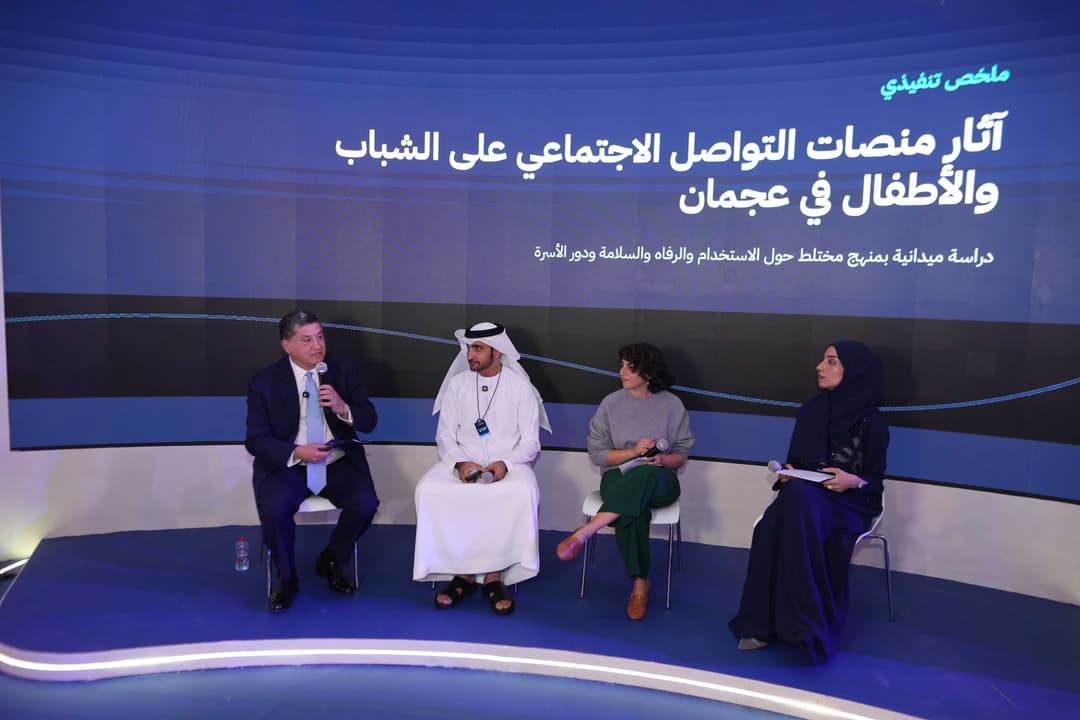
The session “Who Shapes Youth Awareness?”, held as part of Ajman Media Forum 2026 – THE SIGNAL, reviewed the findings of the “Ajyal” study conducted by the General Secretariat of the Ajman Executive Council. The study examined the impact of social media on young people, the psychological, behavioural and social challenges associated with its use, and ways to strengthen digital awareness and the family’s role in supporting younger generations.
The study revealed that 51.8% of young respondents use social media to escape negative emotions, while 41.9% had tried unsuccessfully to reduce their use and 34.1% felt they used it excessively. These findings highlight the importance of developing the skills needed to engage mindfully with digital platforms.
Moderated by Amani Al Matrooshi, the session featured Dr. Raed Awamleh, Governance Expert at the General Secretariat of the Ajman Executive Council; Dr. Ammar Humaid Albanna, Director of Al Amal Psychiatric Hospital; and Sara Al Shaer, Lead Researcher for the Ajyal programme.
Dr. Awamleh explained that the study aims to understand young people’s patterns of social media use and their effects on behaviour, mental health and family relationships, helping inform programmes and initiatives that respond to their needs.
He noted that the study combined quantitative and qualitative research, drawing on surveys of 1,185 young people and 1,356 parents, alongside two focus groups and a specialist discussion.
Presenting the findings, he said that 56.7% of young respondents believe AI-generated content and accept the information it contains without verification, while 54% reported encountering false content online. These findings underscore the need to strengthen information verification and critical thinking skills.
He also noted that 14.9% of respondents do not have a trusted adult they can talk to, while 42.1% said they had not informed an adult when they encountered situations requiring help. He stressed the importance of creating a safe family environment that encourages children to speak openly and seek support.
Dr. Awamleh called for greater mental health awareness, a stronger role for families, and encouragement for young people to participate in sporting, cultural and social activities as beneficial alternatives to excessive use of digital platforms. He added that most young people engage with social media primarily as consumers rather than creators of content.
Dr. Ammar Humaid Albanna highlighted the importance of the Ajyal study and encouraged people to examine its findings to better understand the challenges facing young people, particularly those relating to self-esteem and the influence of idealised images and appearances on digital platforms.
He explained that attempts to emulate these images are not limited to girls but also extend to boys and young men, including comparisons involving appearance and physique. He emphasised the need to teach children self-regulation skills, build their self-confidence, and foster emotional security and open communication within families, alongside early identification of psychological and behavioural difficulties and the provision of appropriate support.
Sara Al Shaer explained that the Ajyal study had identified insights specific to young people in Ajman, alongside challenges consistent with findings from international studies. These insights, she said, would inform the development of future studies and initiatives.
She stressed the importance of equipping young people with practical skills to manage their social media use consciously and responsibly, rather than relying solely on general awareness of its risks.
The study recommended strengthening digital literacy, managing device use, fostering a culture of seeking help, supporting mental health, and expanding young people’s participation in sporting, artistic and community activities to enhance their ability to navigate the digital world and benefit from its opportunities.

 Downloads:
 Press Release
 Photos