Subscribe for Official Updates
Receive official announcements, press releases, and event notices from the Ajman Government Media Office.

Receive official announcements, press releases, and event notices from the Ajman Government Media Office.
 November 19, 2026
 Ajman Media Office
 crown prince
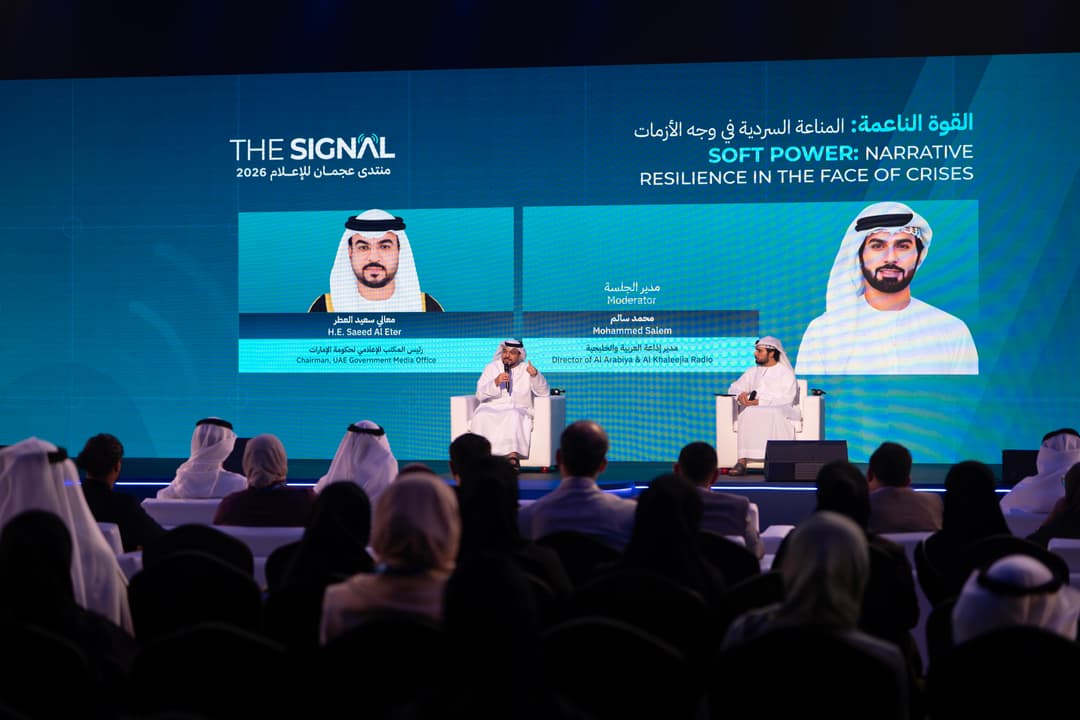
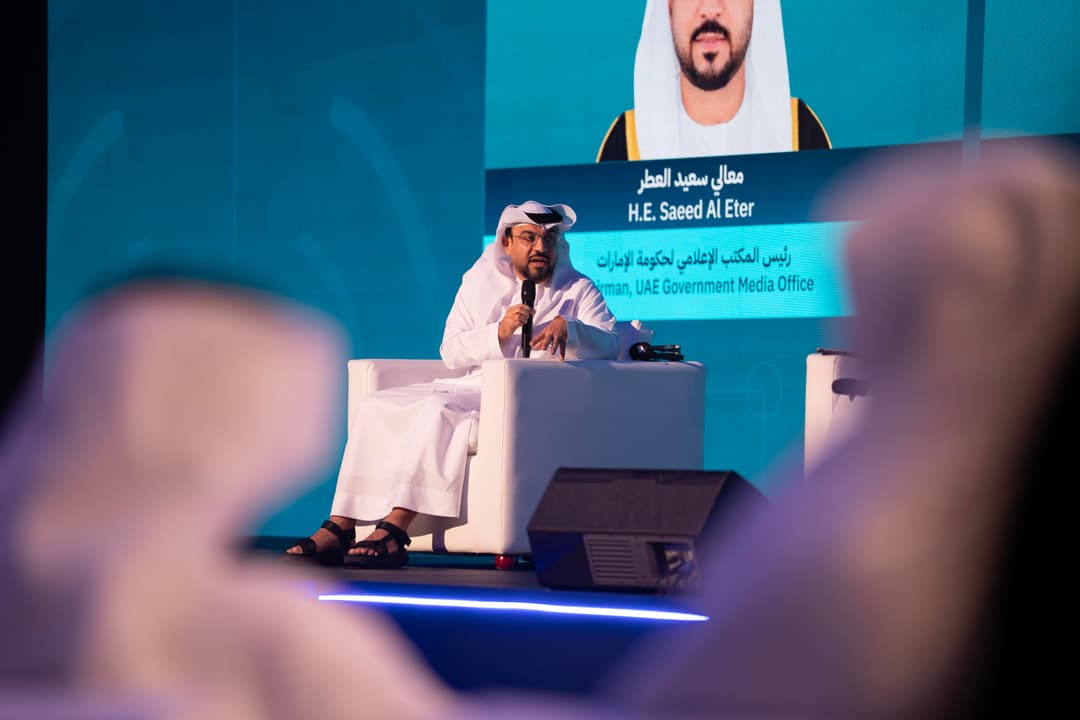
HE Saeed Al Eter, Chairman of the UAE Government Media Office, said the UAE’s soft power is rooted in a successful development model, leadership that enjoys public trust and institutions that have demonstrated their ability to respond effectively to challenges. He emphasised that a country’s reputation is built through achievements, policies and practices whose impact people experience in their daily lives, with effective communication amplifying the credibility those results create.
Al Eter said crises put public trust in institutions and their ability to deliver on their commitments to the test. He added that the UAE’s experience has demonstrated how sustained investment in people, quality of life and institutional efficiency creates a strong foundation for trust and reinforces the country’s international standing and reputation.
He made the remarks during the keynote session ‘Soft Power: Narrative Resilience in the Face of Crises’ at Ajman Media Forum 2026 – THE SIGNAL. Organised by the Ajman Government Media Office, the forum was held under the patronage of HH Sheikh Humaid bin Rashid Al Nuaimi, Supreme Council Member and Ruler of Ajman, and under the directives of HH Sheikh Ammar bin Humaid Al Nuaimi, Crown Prince of Ajman and Chairman of the Ajman Executive Council. Held under the theme ‘Who Owns the Signal?’, the forum brought together media leaders, decision-makers and experts from around the world. Mohammed Salem, Director of Al Arabiya and Al Khaleejiya Radio, moderated the session.
A UAE model that builds trust
Al Eter said the UAE’s global standing is the result of decades of development and achievement, underpinned by its leadership’s vision, the strength of its economy, the efficiency of its institutions, the quality of its services and a society built on tolerance, openness and respect for others. He said the legacy of the late Sheikh Zayed bin Sultan Al Nahyan continues to shape perceptions of the UAE around the world, while the country’s humanitarian approach and international relationships, founded on respect and cooperation, have further strengthened confidence in the nation and its global role.
He said the UAE’s experience in responding to crises has demonstrated the importance of building trust long before challenges arise. Referring to the country’s response during the COVID-19 pandemic, he highlighted measures that supported citizens and residents alike and reflected a government approach centred on people’s safety and quality of life.
Al Eter added that this trust is reflected in the confidence of residents, investors and international partners, as well as in their ability to continue their lives and business activities with confidence amid regional and global change.
He said the UAE Government Media Office monitored around 68,000 articles about the UAE during the first month of the regional crisis. He emphasised the importance of understanding how international media cover the country, identifying the questions emerging from that coverage and responding with facts and evidence that accurately reflect conditions in the UAE.
A resilient economy and institutions equipped to respond
Al Eter said the strength of the UAE’s development model is reflected in its capacity to maintain operations and sustain economic momentum across changing conditions. The continuity of economic activity and essential services, he explained, demonstrates the resilience of the national economy, the efficiency of its institutions and the confidence of investors and trading partners.
He cited the UAE’s non-oil foreign trade, which reached AED 2.945 trillion during the first nine months of 2026, up 10.1% compared with the same period a year earlier. Non-oil exports reached AED 705.8 billion, up 21.6%.
He said these figures, alongside the continued operations of major national institutions and companies, illustrate the economy’s strength and capacity to respond to changing conditions, reinforcing international confidence in the UAE’s development model.
Media as a partner in building trust
Al Eter stressed the central role of media during periods of crisis, highlighting its responsibility to deliver information quickly and accurately, place events in context and help audiences understand both developments and their implications.
He said timely access to information meets the public’s need for clarity, while credible, objective communication strengthens understanding and limits the spread of rumours and misinformation.
He added that rapid changes across the media sector, together with the growing influence of digital platforms and content creators, require more effective communication tools and new approaches to audience engagement. He also highlighted the importance of investing in media professionals and content creators and equipping them with the skills required to produce credible, impactful content.
Al Eter outlined the UAE’s efforts to develop its digital media and content creation ecosystem through New Media Academy programmes, initiatives supporting content creators, measures to attract international media companies and the AED 150 million Content Creators Support Fund.
He also highlighted the role of the 1 Billion Followers Summit in strengthening the UAE’s position as a global hub for digital content creation. Its fourth edition attracted more than 30,000 attendees, including over 15,000 content creators and influencers, and featured more than 500 global speakers and experts.
Speaking to the world in language it understands
Al Eter stressed the importance of tailoring communication for international audiences according to their cultures, interests and social contexts. He said the UAE must ‘speak to the world in language it understands’.
He explained that an effective story begins with what matters to its audience and presents an authentic experience that people can understand and relate to. Audiences in India, for example, may have different interests than audiences in the United States or other markets, so communication should start with a clear understanding of each audience.
Al Eter said the UAE has a wealth of experiences and stories to share across economic development, government services, humanitarian work and quality of life. Communicating these experiences effectively, he said, helps audiences worldwide develop a clearer understanding of the country and its achievements.
He added that the first-hand experiences of residents and visitors represent one of the UAE’s strongest sources of soft power. Their perceptions of the country are shaped through everyday interactions with institutions and communities and through their experiences of safety, stability, respect and coexistence.
 Downloads:
 Press Release
 Photos