Subscribe for Official Updates
Receive official announcements, press releases, and event notices from the Ajman Government Media Office.

Receive official announcements, press releases, and event notices from the Ajman Government Media Office.
 November 18, 2026
 Ajman Media Office
 crown prince
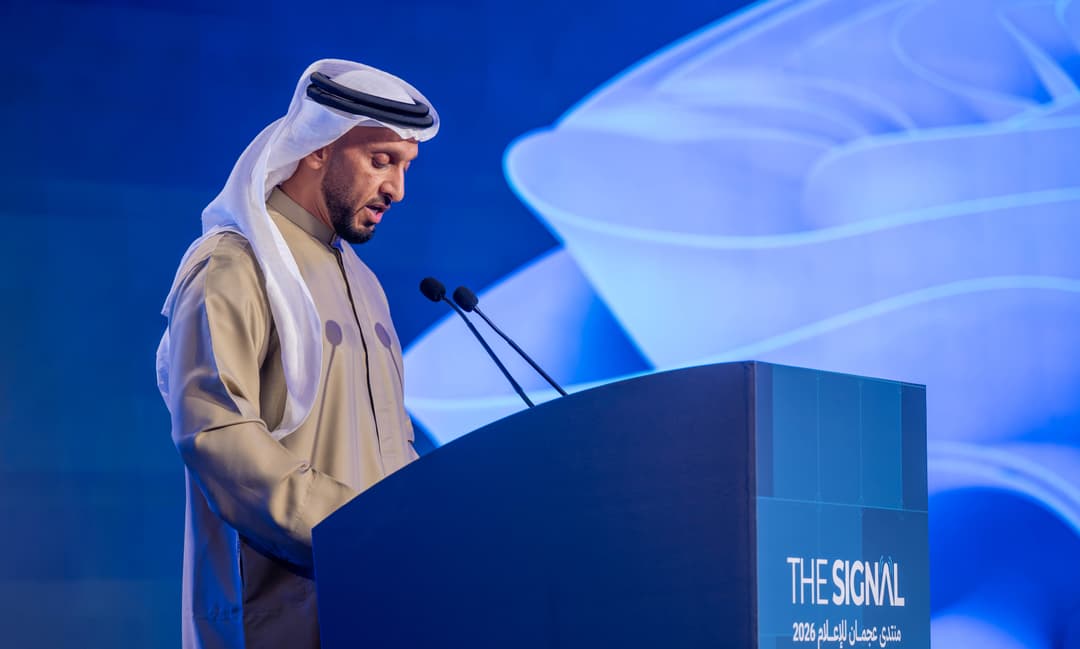
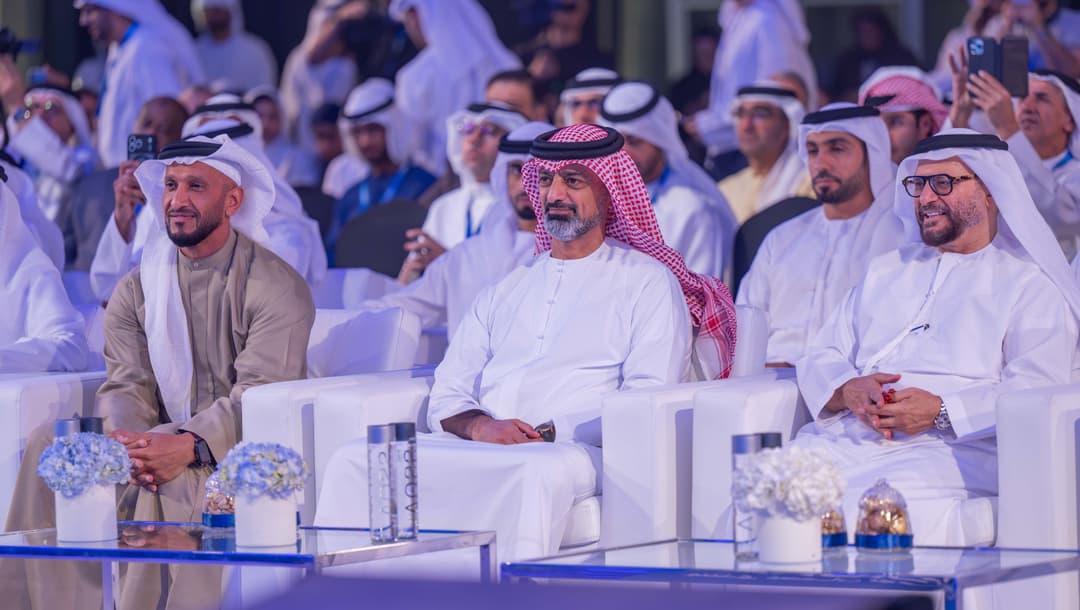
In the presence of HH Sheikh Ammar bin Humaid Al Nuaimi, Crown Prince of Ajman and Chairman of the Executive Council, HE Abdulla bin Mohammed bin Butti Al Hamed, Chairman of the National Media Authority, affirmed that credibility is the foundation of a strong media sector and plays a central role in protecting communities during crises. He stressed that institutions earn public trust through accurate communication, transparency about available and emerging information, and prompt error correction.
Speaking during the keynote session ‘Who Owns the Signal?’ at Ajman Media Forum 2026 – THE SIGNAL, which opened today with the participation of media leaders, decision-makers, experts, researchers and representatives of media and technology organisations, Al Hamed emphasised that the ability to reason carries a responsibility to scrutinise and verify information before accepting or sharing it.
He said: “In our media work, we draw inspiration from the example set by HH Sheikh Mohamed bin Zayed Al Nahyan, President of the UAE. He has shown that belonging is expressed through taking responsibility, standing by our principles and putting them into practice. We have seen how his wise leadership has given our society the strength to face challenges and deepened people’s trust in their institutions.”
He added: “I am pleased that we have come together at Ajman Media Forum 2026 to discuss a responsibility that extends beyond the media profession and affects the stability of communities and their ability to respond to change. The media has a duty to protect the truth and safeguard public trust in information and its sources.”
Highlighting Ajman’s development, Al Hamed said: “Ajman’s development reflects pride in its heritage and openness to the future. Guided by the vision of HH Sheikh Humaid bin Rashid Al Nuaimi, Member of the Federal Supreme Council and Ruler of Ajman, and advanced through the efforts of HH Sheikh Ammar bin Humaid Al Nuaimi, the emirate continues to pursue its ambitions and strengthen its contribution to the UAE’s development.”
Addressing the growing challenge of information reliability, Al Hamed said: “For decades, the reliability of information was a matter debated by specialists. Today, it is a question facing every household. A mother receives an alarming message from an unknown source. A father sees a video that looks real and has no way of knowing who made it. A business owner is waiting for accurate news before making a decision. They are all asking: what can I believe, and whom can I trust? It is our duty to answer.”
He explained that while the media sector has traditionally measured its progress through content production and audience reach, recent developments show that success also depends on information accuracy, how quickly it reaches audiences, and the reliability of its sources.
During crises, he noted, those spreading false information exploit gaps and delays in official communication. A single fabricated image or anonymous message can generate public concern and influence decisions, making timely verification and response essential to responsible media practice.
Al Hamed outlined five interconnected pillars of media responsibility, beginning with the timely provision of reliable information. He stressed that institutions must maintain close communication with their audiences, share verified facts, explain what they are examining, and provide transparent updates as events develop. Delays in communication can allow competing narratives to spread, making their consequences increasingly difficult to address.
The second pillar focuses on maintaining effective communication with the public through multiple channels that can operate under different circumstances. These include radio, traditional broadcasting, text messages and digital platforms, ensuring that official information remains accessible and reaches audiences clearly.
The third pillar centres on harnessing artificial intelligence to protect the truth. Al Hamed called for investment in technologies that can detect fabricated content and verify sources, while maintaining human oversight, professional judgement, and accountability for publication, alongside protecting privacy and individual rights.
The fourth pillar concerns establishing a stable and attractive environment for the media sector, supported by clear legislation and professional standards that protect rights, attract skilled professionals and specialised companies, and reinforce accuracy and accountability. As a global industry operating across borders, the media sector must also strengthen its competitiveness, attract investment and develop international partnerships.
The fifth pillar focuses on investing in people and advancing professional standards. Al Hamed emphasised that regardless of technological capabilities, media professionals remain responsible for verifying information, consulting original sources and providing accurate answers. This requires continuous training, stronger digital skills and a culture of accountability, alongside journalists equipped with knowledge, curiosity and the confidence to exercise sound professional judgement.
Reflecting on the UAE’s experience this year, Al Hamed said recent events had demonstrated the importance of public awareness and institutional preparedness. Media professionals continued fulfilling their responsibilities under challenging circumstances, while families verified messages before sharing them, young people questioned the origins of information, and residents relied on official sources to remain informed and reassure those around them.
He stressed that every individual has a role in protecting the community against rumours and unnecessary alarm. Such awareness, he explained, reflects a leadership approach that places responsibility, belonging and collective action at the centre of nation-building, guided by the principle that national interests and stability take precedence over individual considerations.
Al Hamed added that solidarity among citizens and residents, and between institutions and the communities they serve, remains a defining strength of the UAE model. Protecting the country’s stability is a shared responsibility, with public awareness forming an essential part of national preparedness.
He also highlighted the UAE’s commitment to dialogue, diplomacy and political solutions, explaining that its media communications reflect these principles through accurate reporting, clear explanations of national positions and responsible engagement with the public.
Emphasising the importance of measured communication during periods of tension, Al Hamed said the influence of words extends far beyond their publication. Media messages shape public understanding and can help preserve relationships between communities, while credibility and respect are earned through sound judgement, balanced positions and the ability to assess and respond to developments objectively.
He noted that the UAE’s media preparedness results from sustained institutional efforts to develop legislation, train Emirati professionals and strengthen coordination among relevant organisations. Building on these achievements requires continuous improvement and a commitment to developing capabilities that respond effectively to emerging challenges.
Looking ahead, Al Hamed stressed that the next phase demands greater use of artificial intelligence in the service of truth, alongside closer cooperation to address practical challenges in information verification.
He raised several questions central to this effort: How can the original source of an image be identified? How can corrections reach audiences exposed to misleading information? And how can verification tools be developed to understand Arabic, including its linguistic context and nuances?
He called on media organisations, technology companies, universities and research centres to form partnerships to develop more accurate and secure verification tools, support journalism and safeguard the public’s right to reliable information.
Al Hamed said the UAE’s experience this year had reinforced the conviction that media plays an integral role in protecting society. Every piece of information issued by an official institution carries a responsibility towards the public and an obligation to honour its trust.
He explained that the UAE continues to strengthen its media system to enhance preparedness, effectiveness and responsiveness, ensuring that reliable information reaches the public and that disinformation is addressed promptly, professionally and with supporting evidence.
He further emphasised that the future of media will be shaped by the responsible adoption of emerging technologies, consistent adherence to professional standards, and organisations' ability to earn and maintain public trust.
Affirming the UAE’s openness to partnerships founded on respect for truth, knowledge and the public’s right to information, Al Hamed expressed hope that the Forum would lead to practical initiatives and meaningful collaborations that contribute to the sector’s future development.
In closing, he stressed that when the need for truth is greatest, the UAE will remain a trusted partner, committed to its responsibilities, faithful to its commitments, and dependable at decisive moments.
The Ajman Government Media Office is organising the inaugural Ajman Media Forum 2026 – THE SIGNAL under the patronage of HH Sheikh Humaid bin Rashid Al Nuaimi and the directives of HH Sheikh Ammar bin Humaid Al Nuaimi, Crown Prince of Ajman and Chairman of the Executive Council.
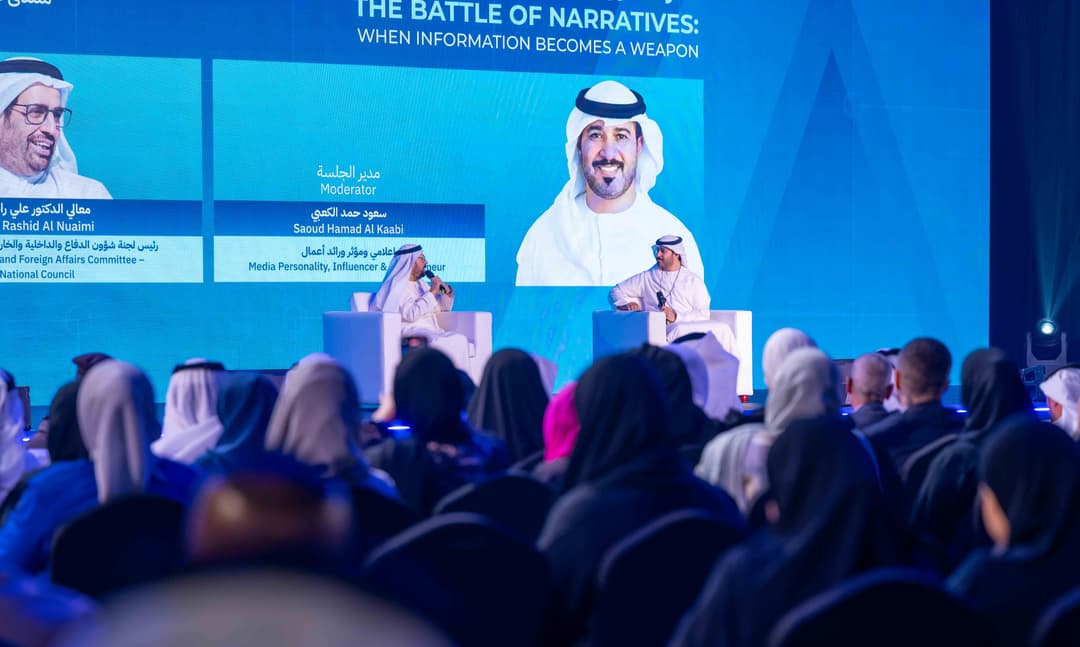
Taking place on 18 and 19 November at the Emirates Hospitality Centre in Ajman, the Forum features 23 sessions with 68 speakers from 17 countries, bringing together media leaders, decision-makers, experts, and researchers to explore the industry's future amid rapid technological and structural transformation.
The Forum also brings together 53 participating organisations and partners, including media institutions, local, regional and international government entities, and exhibitors. Its programme examines the influence of artificial intelligence and digital technologies on content creation and public opinion, providing a platform for dialogue, knowledge exchange and collaboration on the future of media.
 Downloads:
 Press Release
 Photos